


Supply chain · Inventory · Pharmacy · Patient care
Last mile
made easy.
Inventory, distribution and pharmacy in one connected platform. Know what is available, reduce avoidable waste and keep daily work moving, online or fully offline.
- Works offline
- 7 languages
- 22 countries
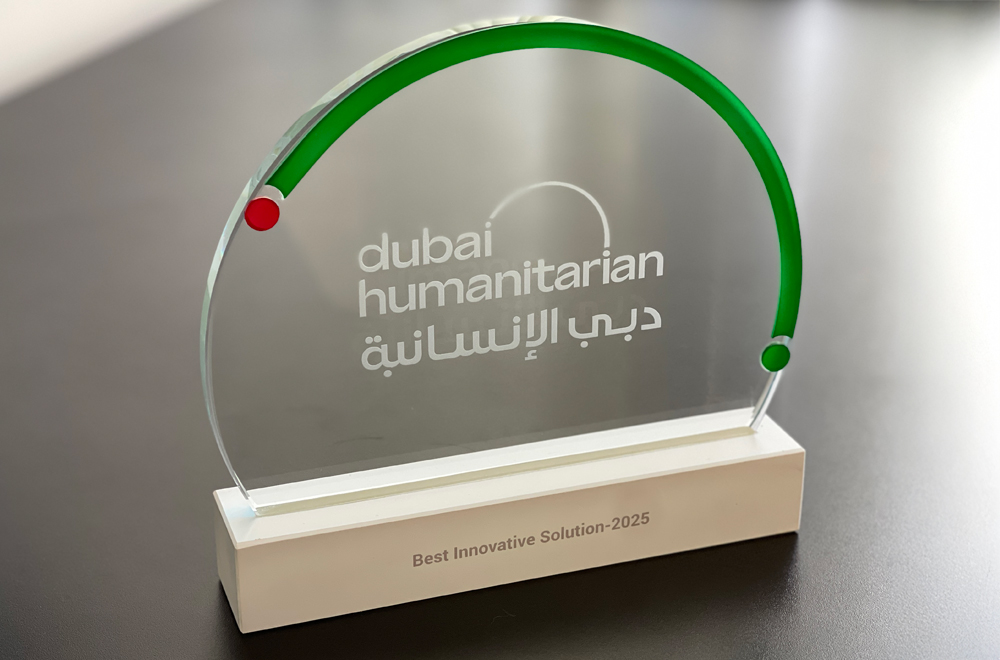
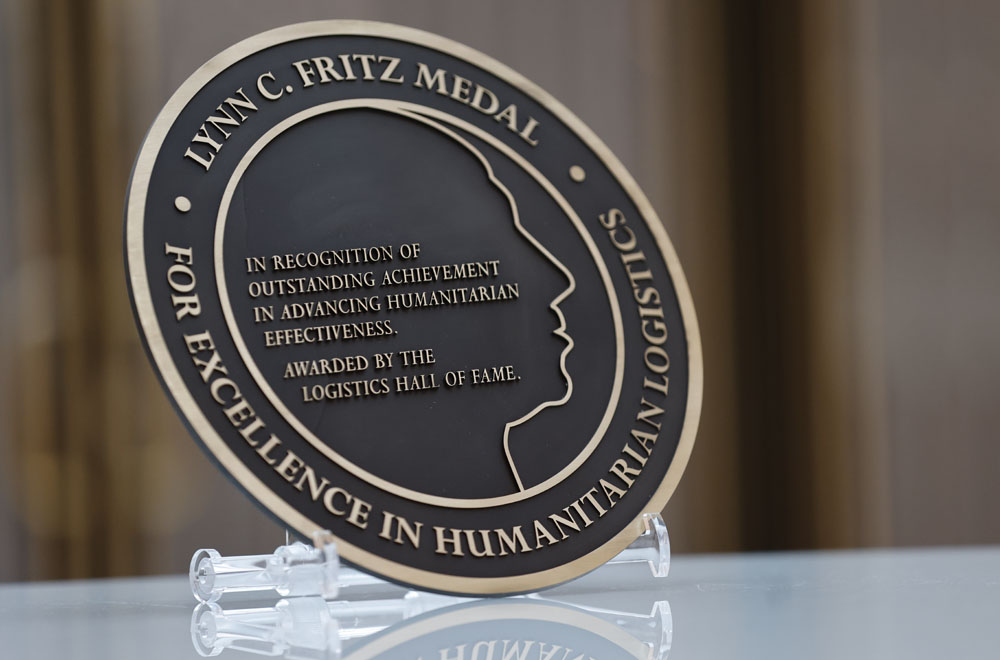
- Award-winning


pims@internationalmedicalcorps.org
pims.internationalmedicalcorps.org
Why it matters
Up to 70% lost.
Make every supply count.
Losses can reach 70% in the last mile of the supply chain for essential commodities. PIMS helps teams track stock, identify risks and direct available supplies where they are needed.
Expiration noticed too late
Total quantities can look healthy while individual batches approach expiration. Finding them late leaves fewer options to use or redistribute them.
Available, but at the wrong site
One site needs stock while another holds a surplus. Shared visibility makes redistribution opportunities easier to identify.
The cost of urgent orders
A shortage means more than a missing item: it can trigger an urgent purchase, an extra delivery and time spent chasing both.
Small differences accumulate
When recorded quantities and physical stock disagree, staff spend time recounting and investigating instead of receiving, picking or serving beneficiaries.
Unsafe or duplicated dispensing
Separate patient and dispensing records can make previous treatment, allergies and possible interactions harder to review.
The same figures entered again
Rebuilding reports from separate records takes time away from reviewing results and responding to issues.
Self-check
Can your team answer these questions today?
- How much stock, in value, expired last quarter?
- Which facility has surplus stock that another needs today?
- How many beneficiaries received two interacting medicines this month?
- Can you identify possible duplicate treatments?
- How long does a full stock count take, and can you explain any differences?
- What is in transit to each facility right now?
- Were any vaccines outside their required temperature range this week?
- Can you trace a batch from receipt to its final destination?
Each unanswered question points to a gap in visibility. See how PIMS helps close it.

Impact
Better visibility. Measurable improvements.
Demonstrated results from PIMS deployments.
Recognition

The platform
One platform, from planning to point of use.
Ten core modules cover planning, sourcing, inventory, distribution and dispensing. Start with the capabilities your teams need, and add the CCR extension to bring patient care into the same system.
- Plan
- Source
- Receive
- Store
- Dispense
- Replenish
- Report
Dashboard & Alerts
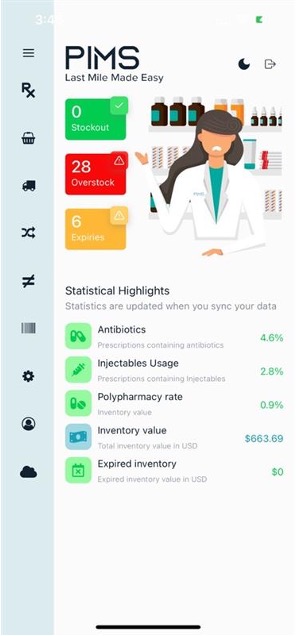
See shortages, excess stock and pending work together, then review opportunities to redistribute supplies across sites.
Items & Inventory
Locate stock, monitor expiration dates and track costs for medical and non-medical supplies, with barcode, QR and GS1 support.
Requisitions & Sourcing
Compare suppliers, document sourcing decisions and move approved needs through procurement.
Receipt & Dispatch
Receive and dispatch stock with clear records, fewer repeated entries and support for offline sites.
Dispensing & Pharmacy
Manage prescriptions, distributions and chronic refills together, with checks to support safer dispensing.
Planning & Resupply
Plan quantities and budgets around actual consumption and expected care needs, with requests ready for review.
Stock Counts & Corrections
Reconcile physical stock with your records, online or offline, with reasons and approvals for corrections.
Cold Chain & Warehousing
Protect sensitive supplies with storage alerts, and help warehouse teams locate stock quickly.
Reports & Analytics
Use 50+ reports to understand stock, track performance and answer operational questions without rebuilding spreadsheets.
Integrations & Interoperability
Connect PIMS with existing finance, health reporting and monitoring systems to reduce duplicate work.
CCR Extension
Connect patient care with the supplies it depends on. The extension unlocks three more modules:
- VisitsRegistration, queues and triage
- Case files & ConsultationsCare pathways, forms and prescribing
- LabOrders through samples to results
PIMS mobile · Android, iOS & WhatsApp
Reach the places laptops and servers can’t.
Humanitarian operations stretch across remote, insecure and fast-changing settings, where sending computers, IT staff and reliable connectivity is rarely possible. The PIMS app runs on the phones teams already carry, bringing key tasks to the last mile without new infrastructure.
- Look up stock at any facility
- Register beneficiaries, dispense items
- Follow the pharmacy waiting list
- Review dispensing indicators
 Use PIMS on WhatsApp. Dispense items, check stock and approve transfers with step-by-step guidance in seven languages. No extra app needed.

CCR Extension · Continuity of Care Records
Connected patient care. Adapted to your services.
Bring visits, consultations, orders and prescriptions into one case file, for clinical services and case-managed programs alike.

- 1RegisterVisit and queue token
- 2TriagePrioritize care and track waits
- 3Case fileThe appropriate care pathway
- 4ConsultRelevant records and value alerts
- 5OrderLab, imaging, prescriptions
- 6OutcomeDocument the next step or closure
Adapt to your clinical services
Update consultation forms and care pathways through settings as services change, without waiting for a software release.
Relevant information, less repetition
Show fields relevant to age, sex and pregnancy status, and reuse earlier records to reduce repeated entry.
Support informed clinical review
Highlight values outside age- and sex-specific ranges and flag responses for review, with access controlled by role.
Familiar clinical language
Use seven languages and consistent links to ICD, symptoms, medicines, procedures and allergies.
Works where the connection doesn’t
Continue recording care offline and sync later, with training mode and printable outputs available.
Connected to the pharmacy
Send prescriptions to the pharmacy for dispensing with safety checks and automatic stock updates.
Built for
Getting started
A supported start. An ongoing partnership.
We assess your needs, configure PIMS and prepare your teams for daily use. Key staff learn to support colleagues and extend PIMS to additional sites as your operation grows.
- 1 · Discover
We assess your sites, commodities, workflows and connectivity to understand what your teams need.
- 2 · Build
We configure PIMS around your operations, prepare your data and set up your working languages.
- 3 · Succeed
We train teams for daily work and prepare key staff to support future roll-outs. Continued follow-up helps partners build capacity, review insights and work through operational challenges.
Why PIMS is built this way
The last mile can’t be fixed with a logistics tool alone.
Supplies are lost where care is delivered, and the people there are nurses, pharmacists and program staff, not logisticians. That is why PIMS brings supply chain, pharmacy and patient care into one hybrid system.
- Adoption needs a return
Frontline teams won’t keep a logistics system up to date on top of their day job. PIMS pays them back with faster dispensing, shorter queues, safer prescribing and patient records, and that daily use keeps stock data accurate.
- One language for two worlds
Logistics talks in consumption rates, lead times and batch numbers; health teams talk in patients, visits and treatments. PIMS lets staff record work in the language of their service and turns it into supply data behind the scenes.
- Stock connected to the service
A stockout isn’t a data problem; it’s a beneficiary going without. Linking every movement to the visit, prescription or program it served shows where supplies are really needed and why losses happen, which a logistics view alone can’t see.
Hybrid by design: the supply chain improves when the people delivering the service can use it.
Get a first-hand look
See how PIMS fits your operation.
Book a demo with the team that builds PIMS.
pims@internationalmedicalcorps.org
+1 (310) 826-7800
pims.internationalmedicalcorps.org
 12400 Wilshire Blvd., Suite 470, Los Angeles, CA 90025 · © 2026 International Medical Corps